Library Interventions, 2013-2020, enabled artists, writers, and performers to enact the creative potential of research. I initiated the project, created briefs, and curated (or facilitated curation), but everything about the project was massively collaborative. It ran out of an arts university, north of England, so the initial audiences were students (and staff) to whom Library Interventions was hoping to flag up the creative potential and indeed the very existence of a library. It began as an improvisation and managed to keep going. Soon it was obvious that the work created as Library Intervention appealed to an audience well beyond the institution.
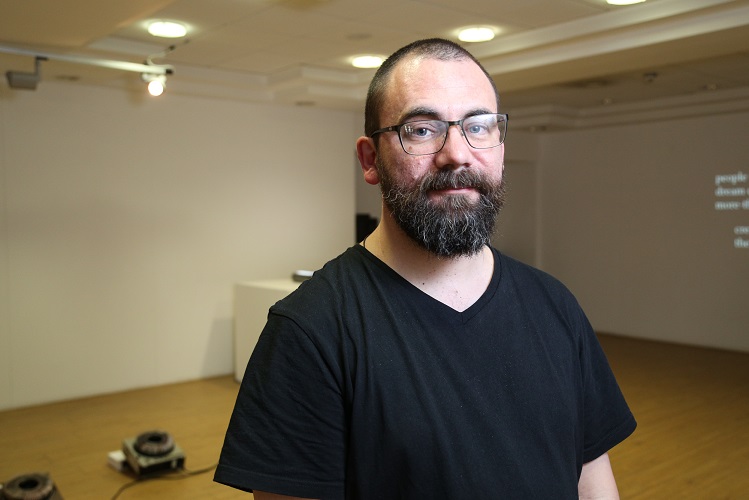
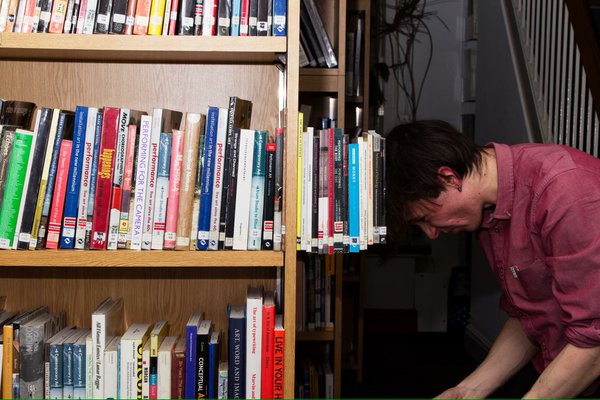
Nick Norton as a curator, 2016. Photo: Ian Hinchliffe
Covid stopped the project, and after that I left the library. Library Interventions was not the first project to put library and creativity into a fruitful circuit: creativity-library-research-creativity. In many respects it seems an obvious undertaking, so there will be others. What follows is a sample only, there is a great deal I have had to leave out or pass over without much comment. At the end I will name all the artists who contributed. Before then, I work backwards from the last fully realised exhibition which occurred in 2019.
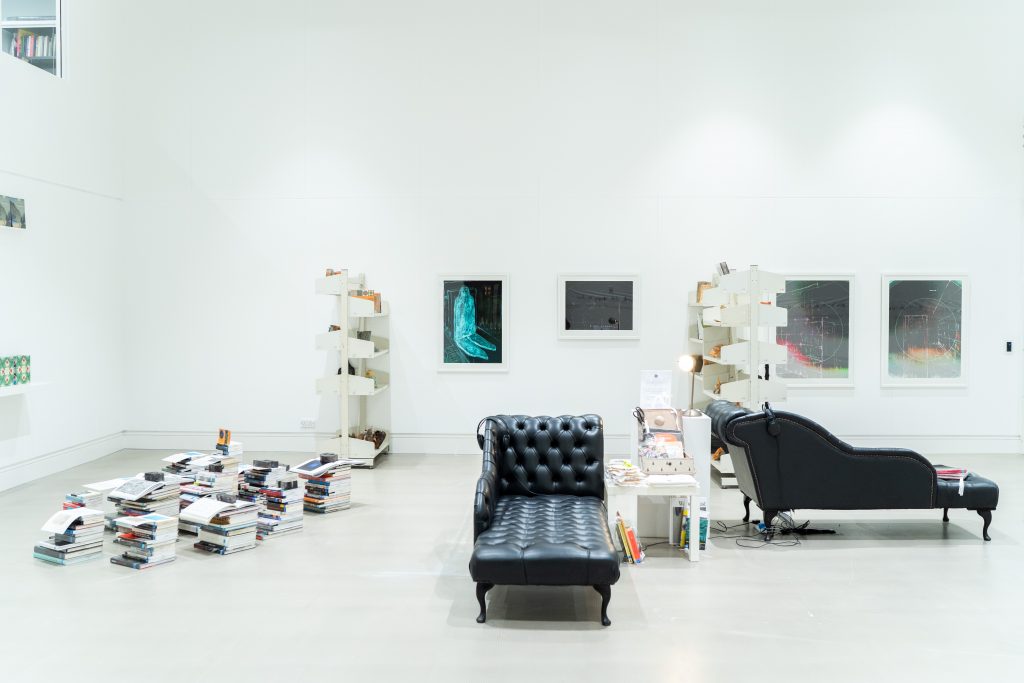
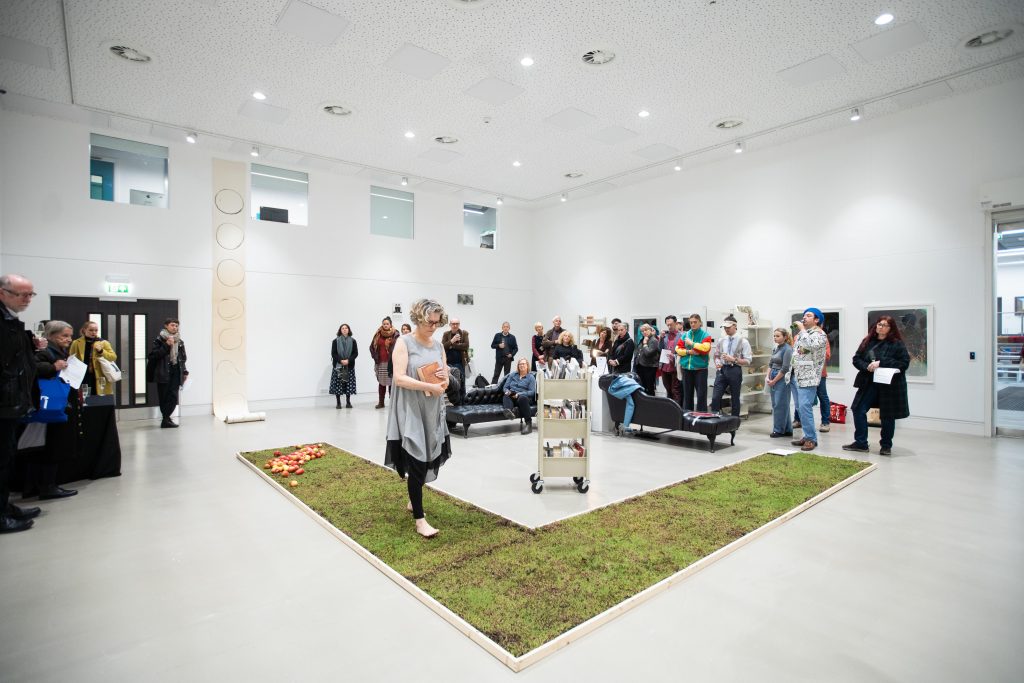
Library Interventions 2019 – photo: Hamish Irvine
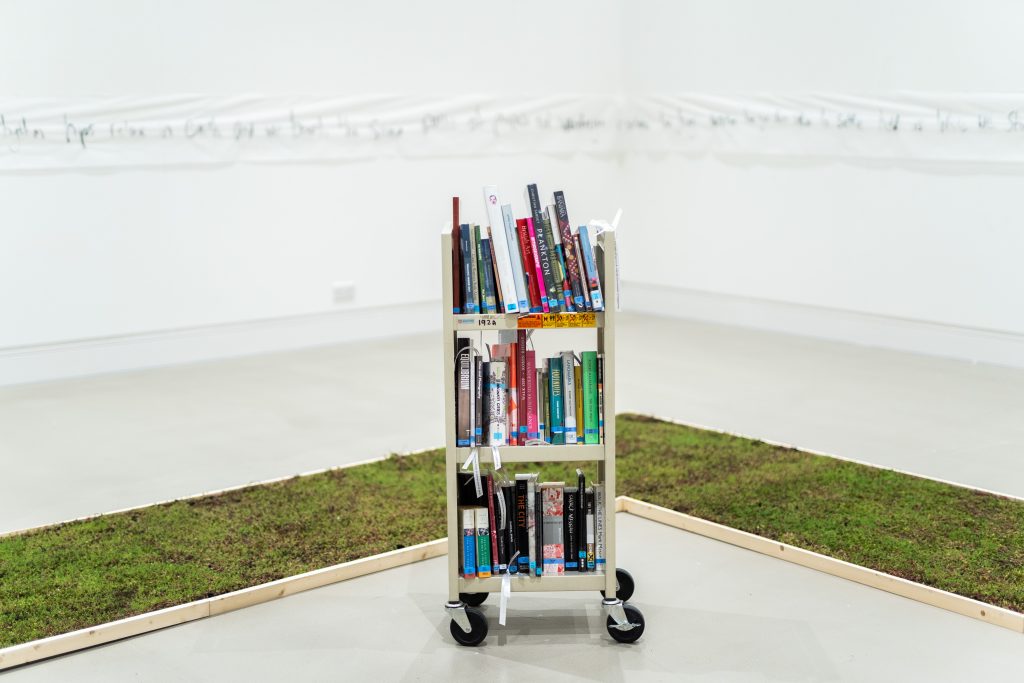
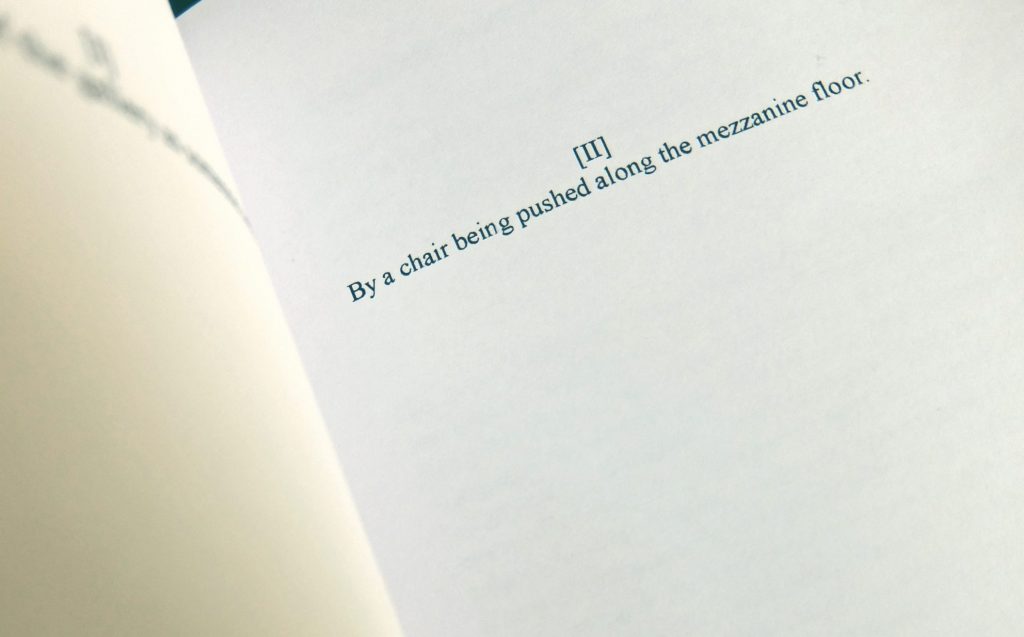
The heroic library trolley. I believe it featured in every Library Intervention.
Library Interventions: Disappearing Reappearing
Co-curated by Dee Heddon with Angela Kennedy, Rosie O’Grady and Garry Barker.
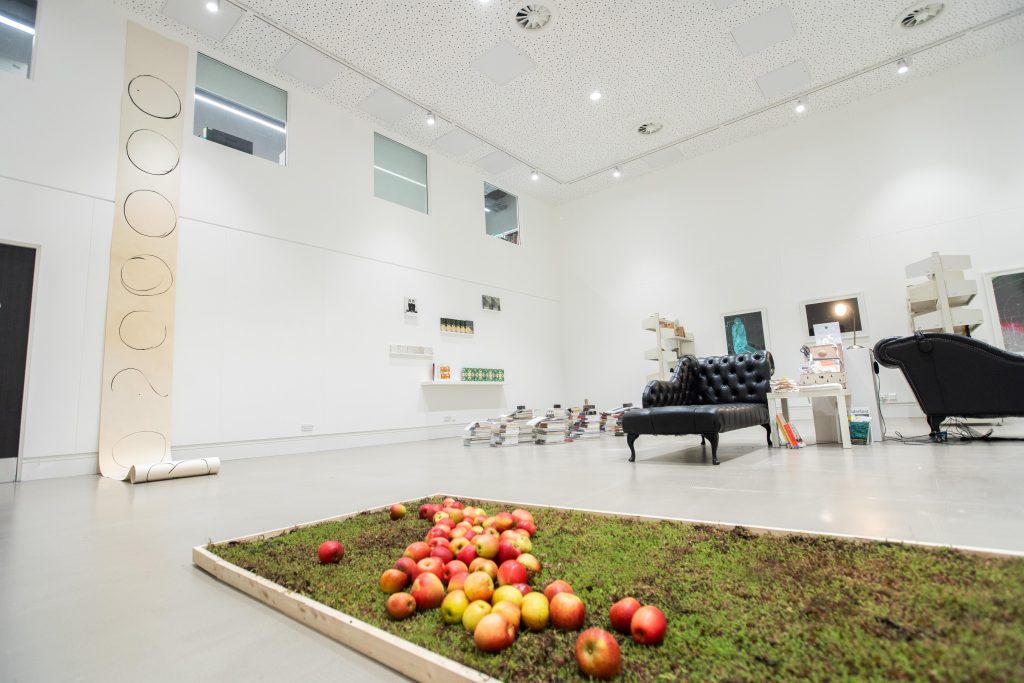
In 2019, the University’s library relocated. The Library closed and opened, disappeared and reappeared, and it was transformed by this passage between one place and another: disappearing and returning, missing and finding, journeys of absence traversed into journeys of presence. The Library now takes its place on a Walk.
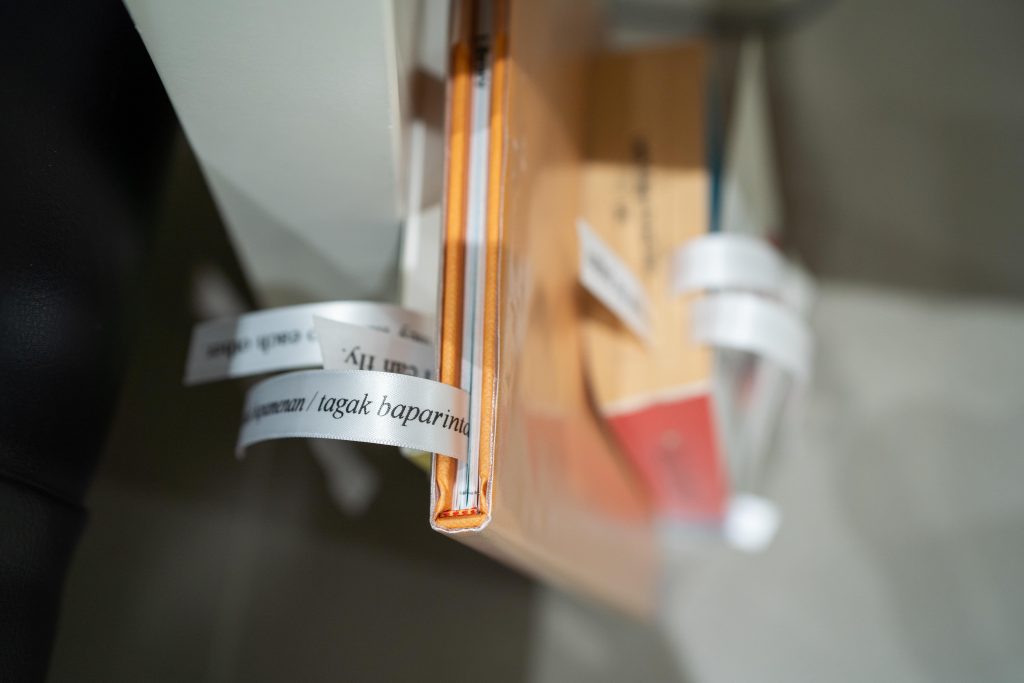
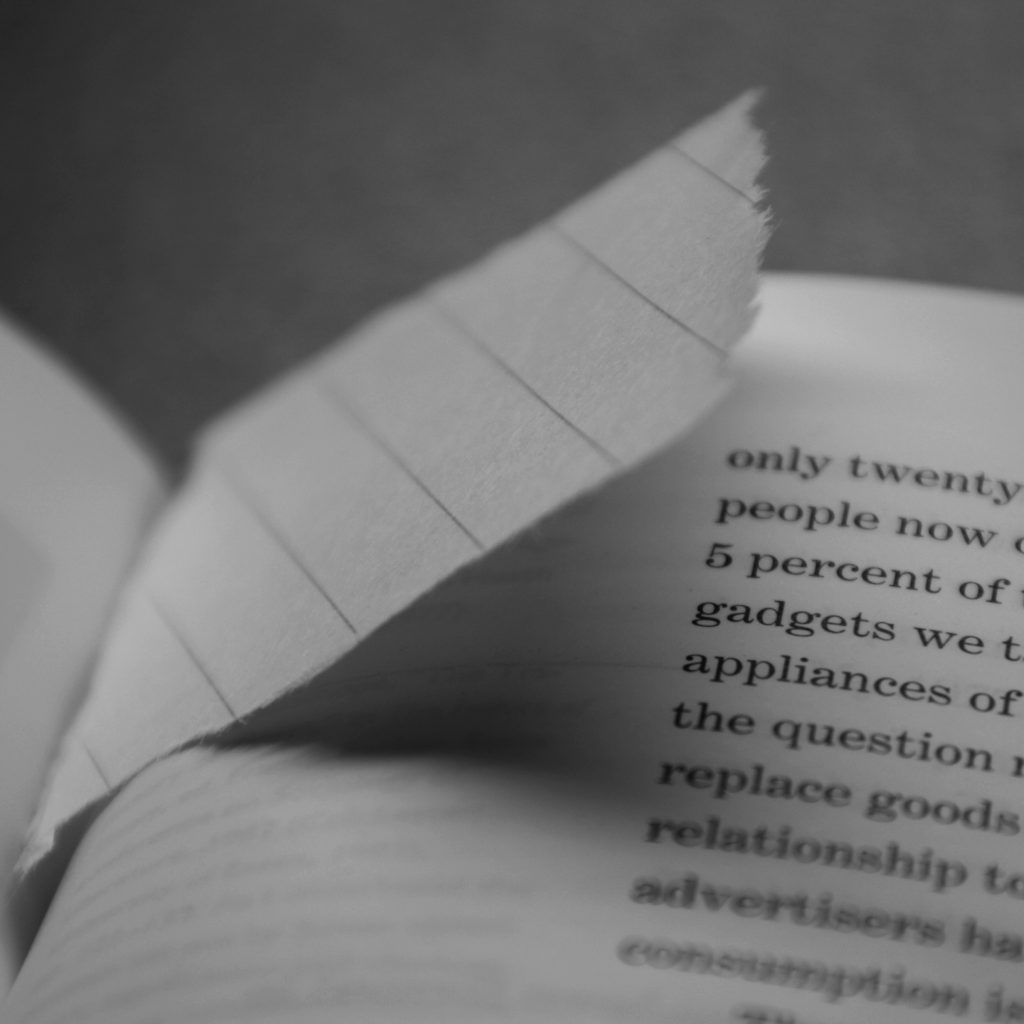
Sentences taken from books, taken from the library, printed on ribbon, taken out for a walk. Photo: Hamish Irvine
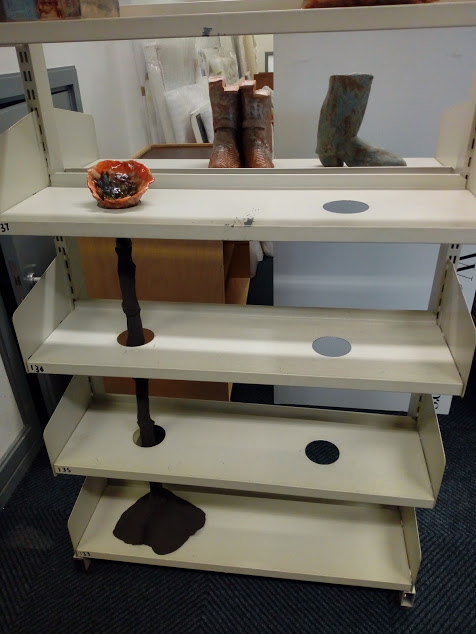
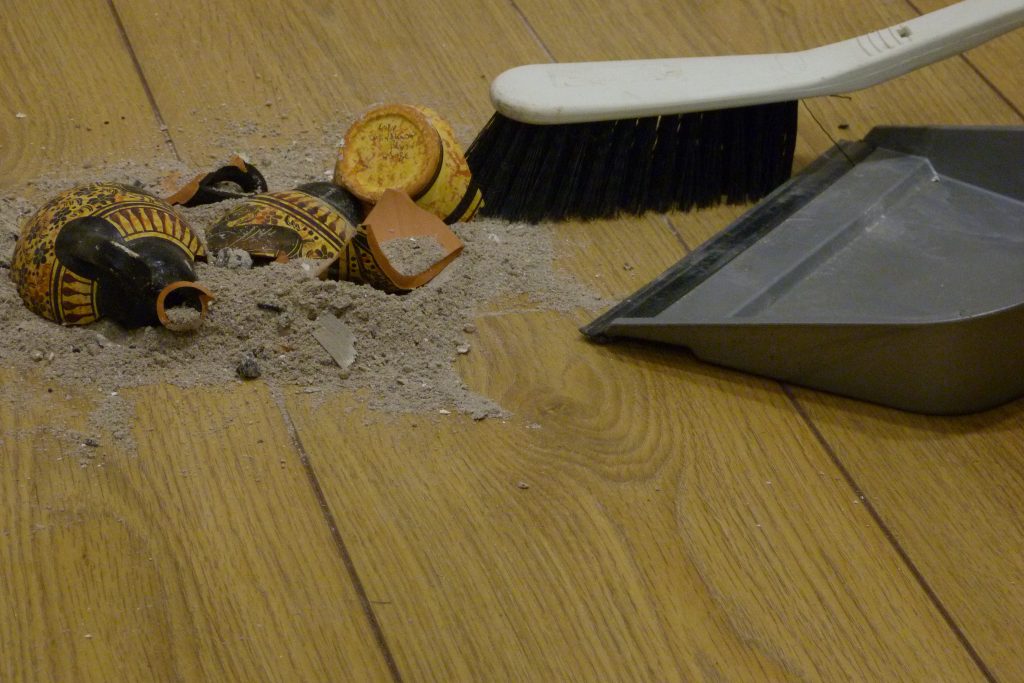
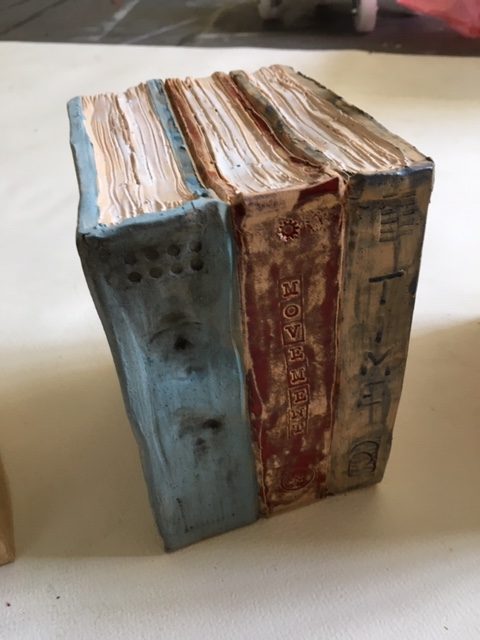
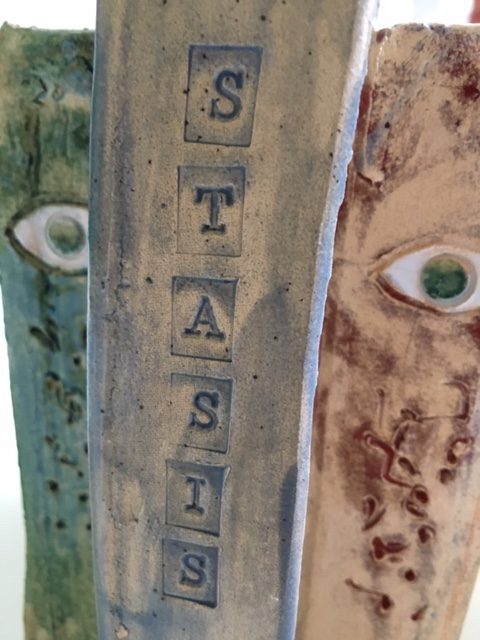
The artists explore their walking with this appearing and re-appearing Library. The exhibition tracks the performing journey, revelling and revealing through threads, performance, ceramics, quantum entanglement, and sentences in the environment.
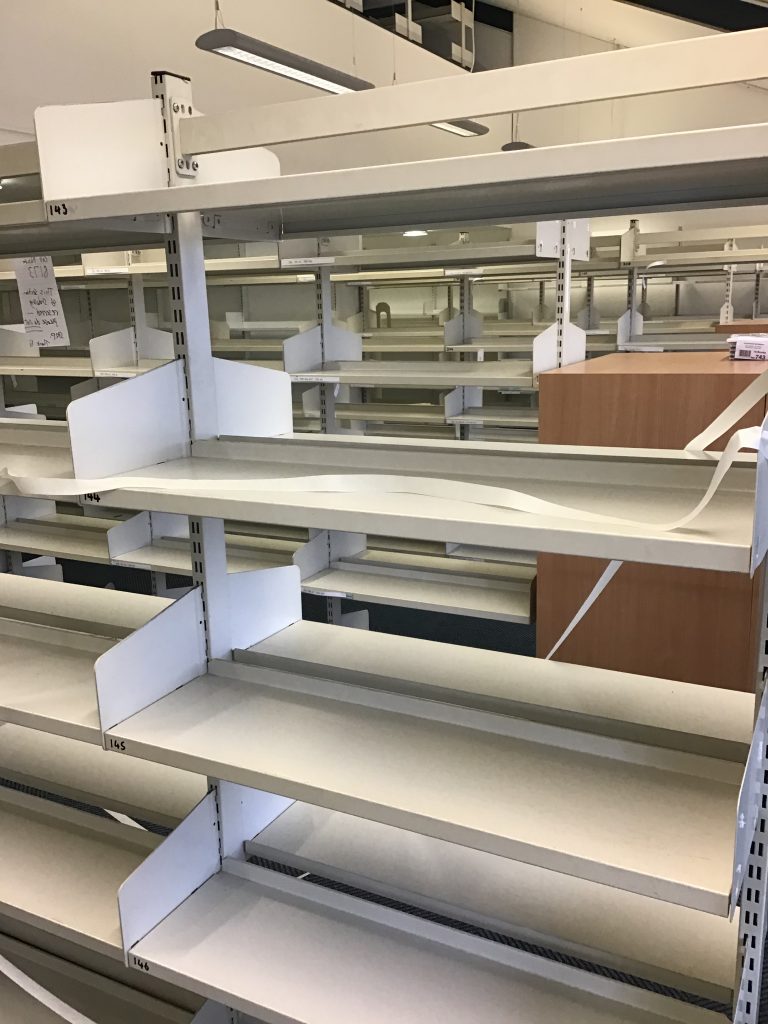
An empty library
Garry Barker repurposing old shelvingA sentence taken for a walk
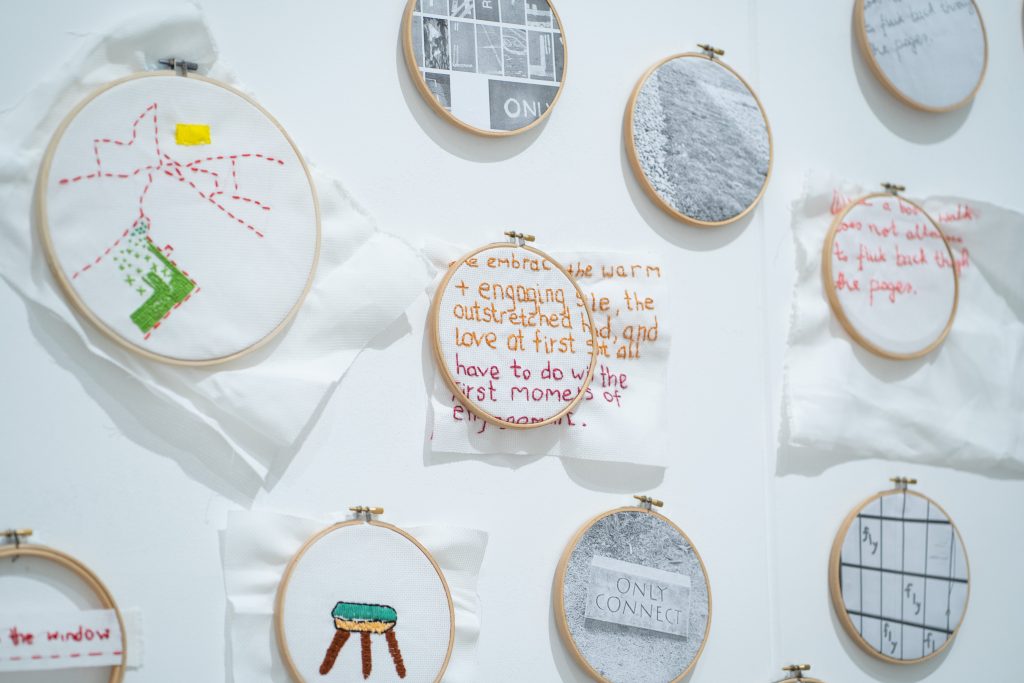
Dee Heddon processed her sentences via cross stitch and cross roads
Photo: Hamish Irvine
2018 – Library Interventions: Moving Knowledge
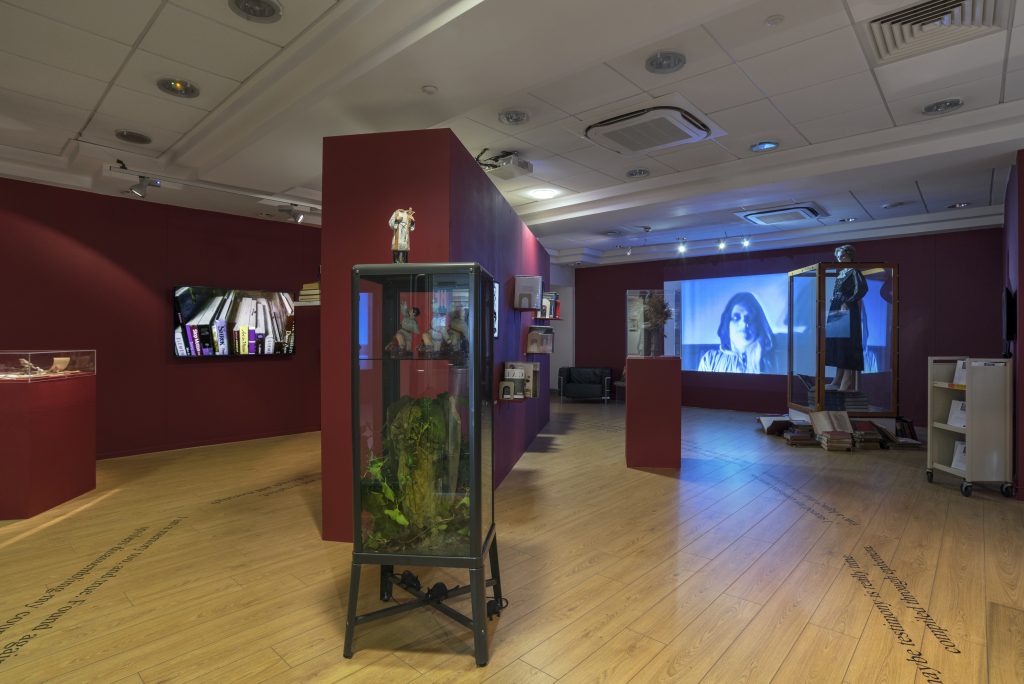
Artist lead and co-curator Michelle Williams Gamaker, with Clare Charnley & Geoff Clout – working collaboratively, David Steans, and the poet Joey Chin. A further contribution to the exhibition was provided by Miriam Naeh during the concluding symposium.
All exhibition photography by Harry Meadley
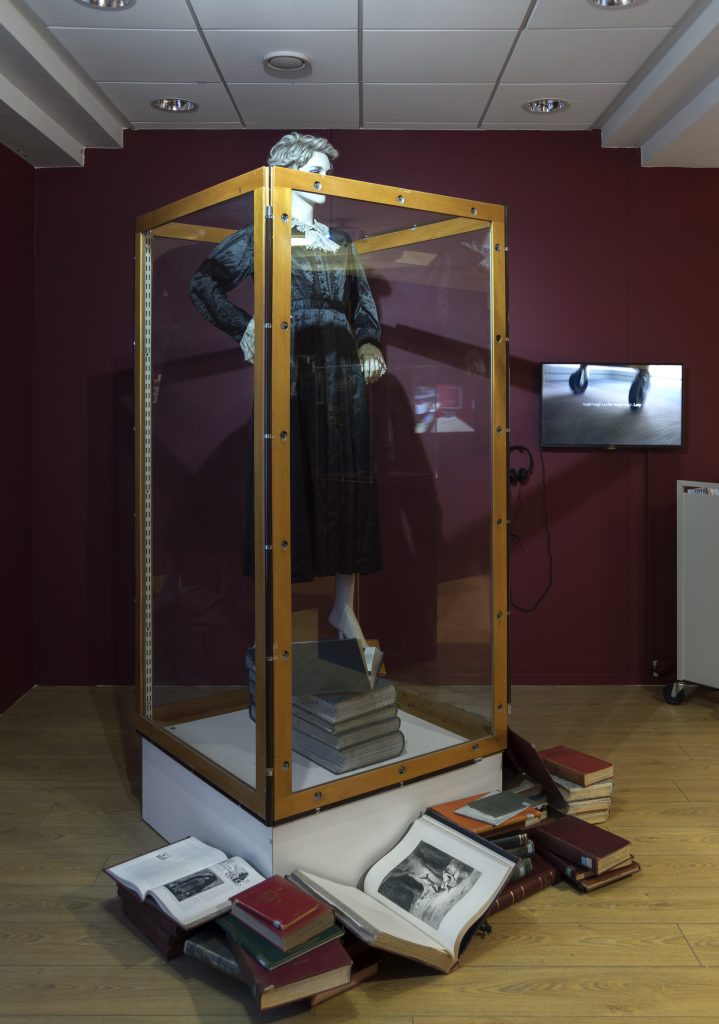
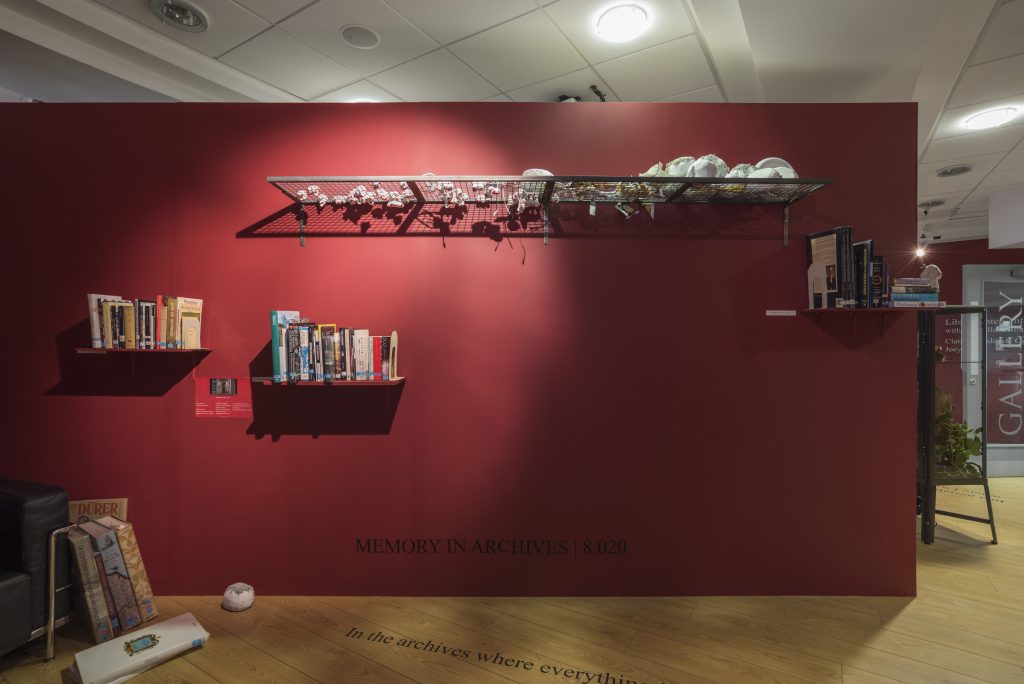
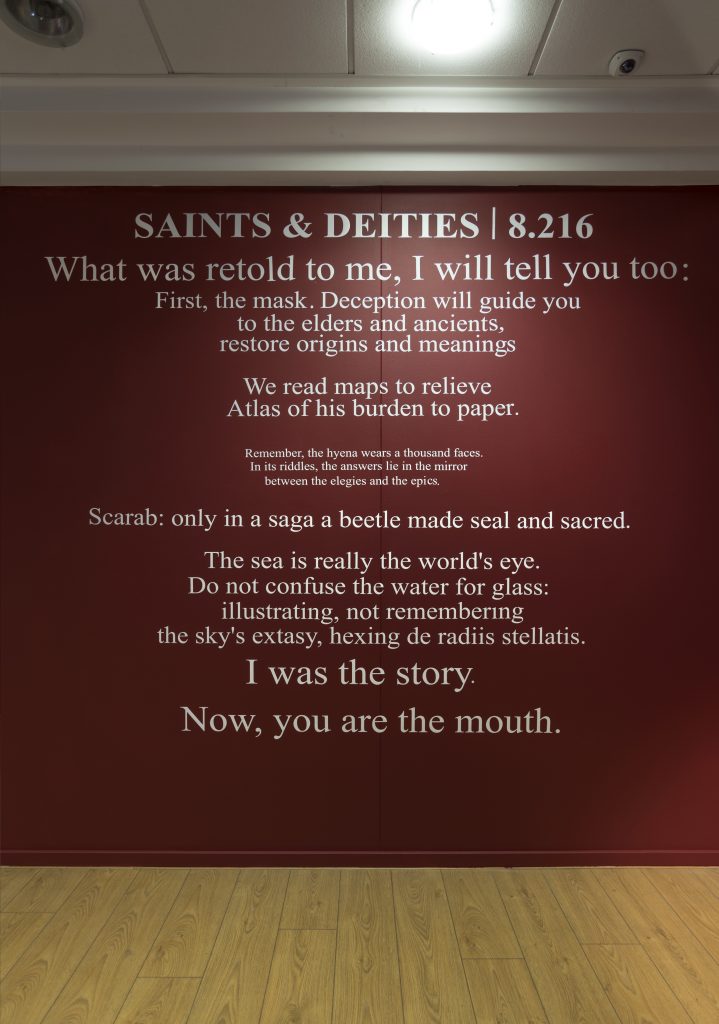
…with garnet coloured walls, with obsessive collections emptied into vitrines, with a showroom dummy acting as a watcher, an infestation of rubber rats, the fruiting body of alien seeming fungi, with poetry displayed over walls and floor, and several filmic screens, Moving Knowledge evoked a hermetic sense of interconnection, a vital sense of interplay.
The exhibition folds in and out on itself… hinting at genealogy of existing works & promising the gestation of new works to come.
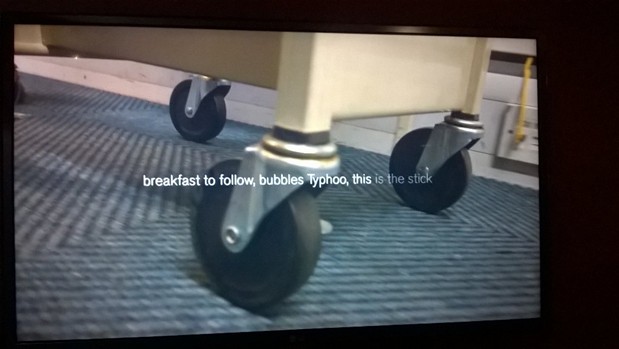
The heroic trolley’s words were discovered, its squeaky wheels being revealed as potent glossolalia in Clare and Geoff’s film.
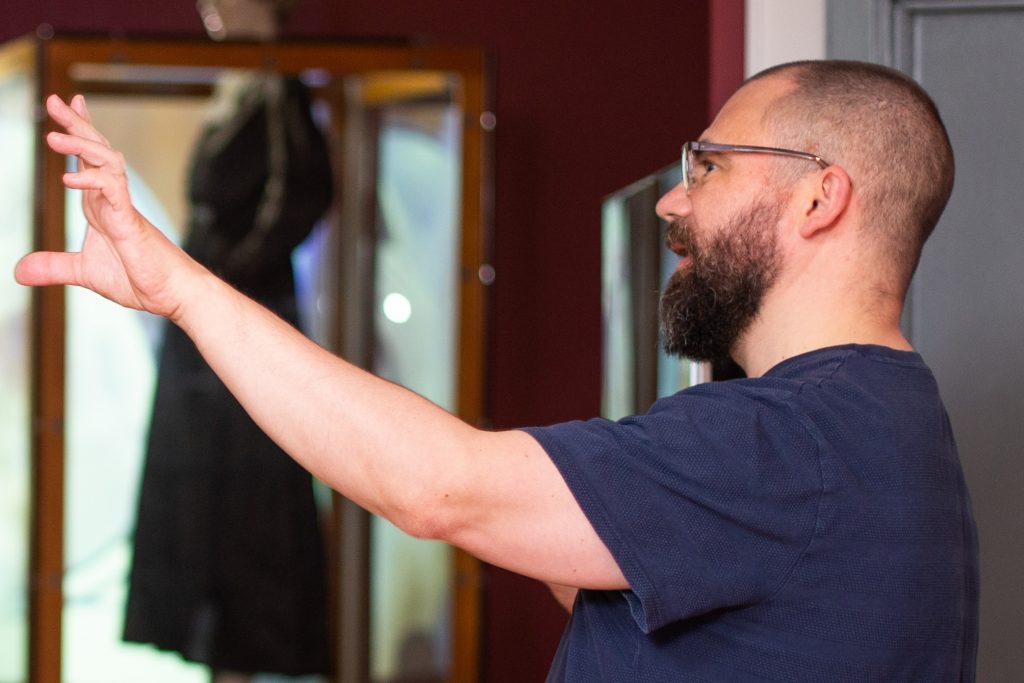
Nick Norton – speaking for the symposium.
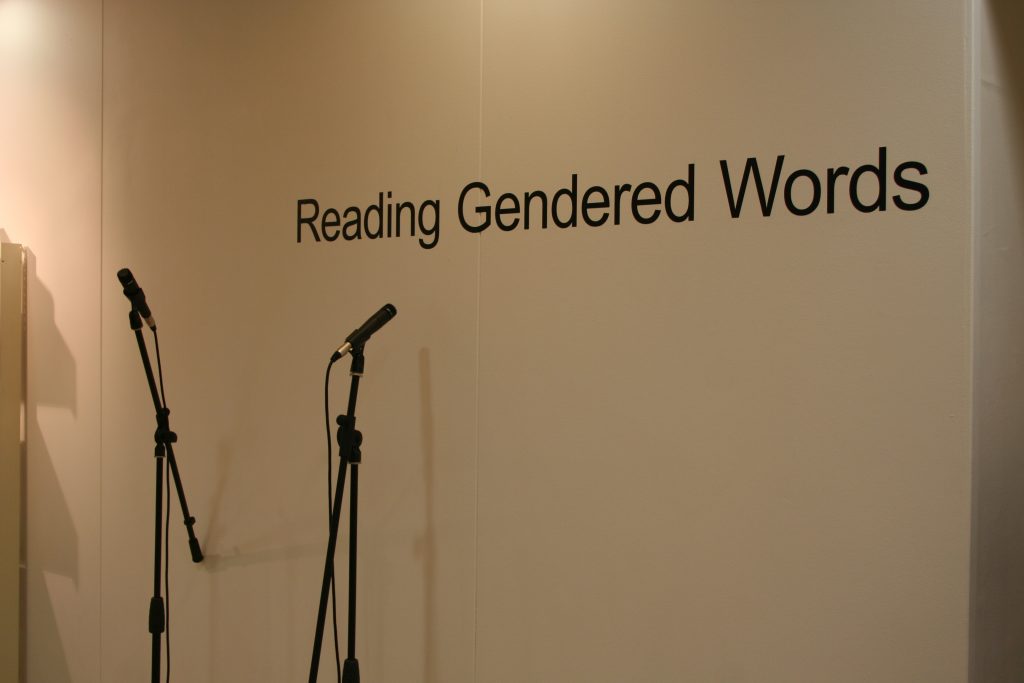
2017 – Library Interventions: Reading Gendered Words
The Girls Reading Group, SPUR, convened within Reading Gendered Words, a symposium within a symposium. Photo: Ian Hinchliffe
Maria Fusco as co-curator instigated an exhibition as symposium, a symposium that suggested we re-read Gendered Words.
I propose a re-structural analysis
I disagree that opaque processes of ordering and classification in libraries and archives are neutral.
I say we challenge them directly
Maria Fusco set the challenges; SPUR (Elspeth Mitchell, Abi Mitchell) and Rosa Nussbaum helped populate the exhibition. Fusco invited Wendy Kirk as the librarian from Glasgow Women’s Library to join the symposium team. A lively conversation questioned the gendered shape of knowledge as found in the library when a library mimics the biases and the wider social systems in which it sits. Could, it was asked, the library function as a countermeasure to the presumptions of such social systems?
This project [Fusco notes] is directly influenced by, and indebted to the good work and citizens at the Glasgow Women’s Library.
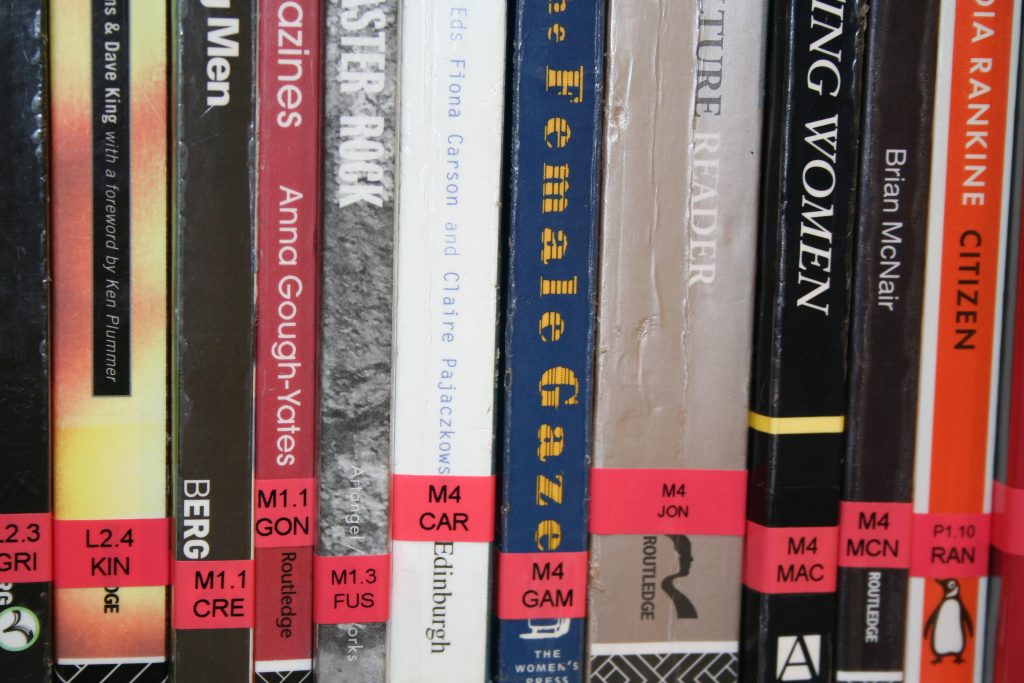
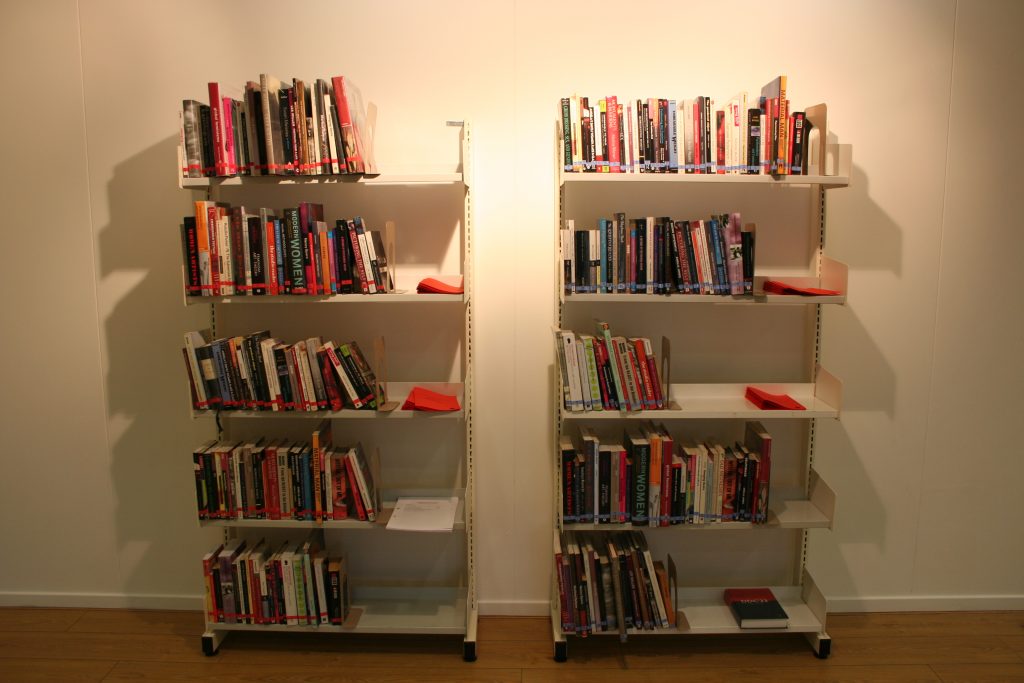
On the shelf a deliberate focus generates differing classifications. New classification systems result in new associations, and hence new forms of society may proceed.
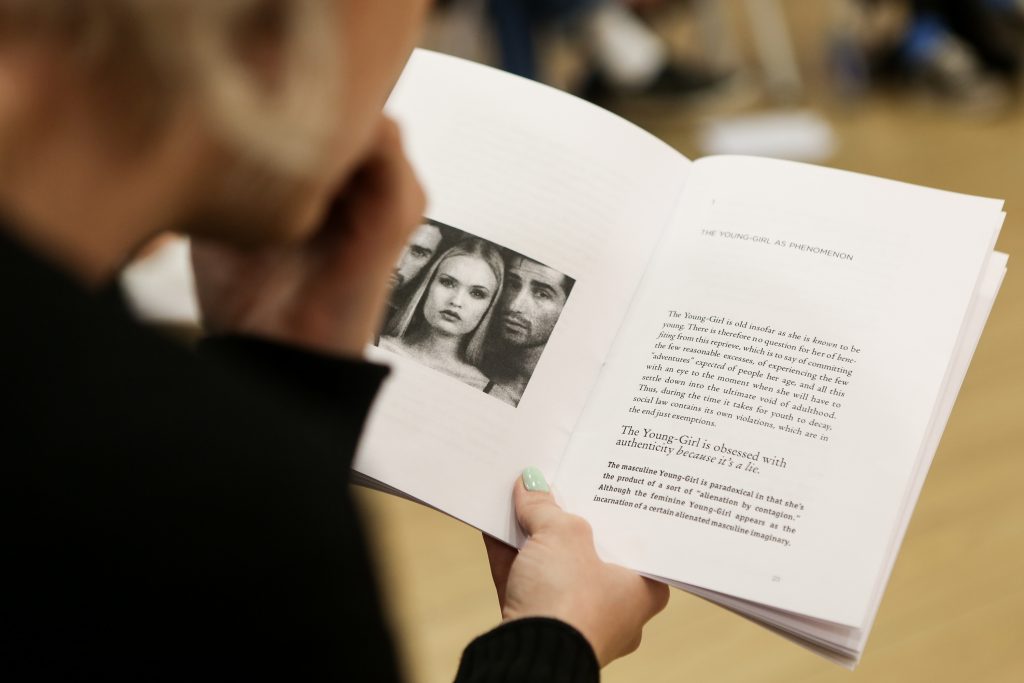
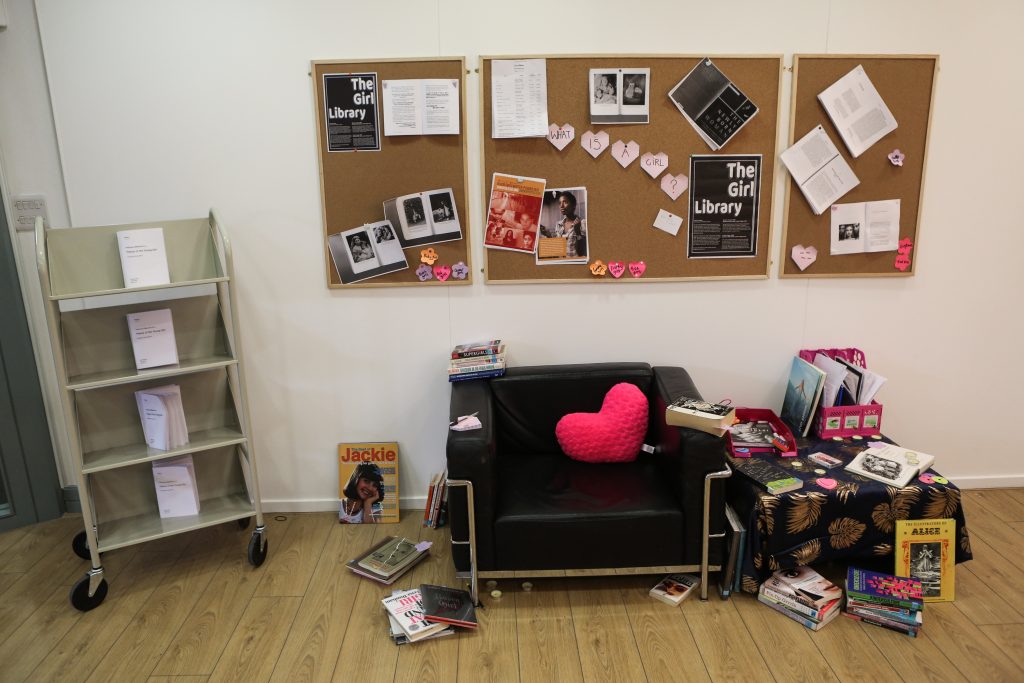
Two collections with duplicated books; one set of shelves is Dewey Decimal, by-and-large a standard ordering of knowledge, the other is ordered according to the system invented and organised by the Glasgow Women’s Library. The audience are invited to investigate bias and uncover new manners of connecting knowledge.The Girl Library, SPUR. SPUR asked “What is a girl?” investigating the epistemology of becoming, in a female body, of youth, infatuation, obsession and desire. Photo: Ian HinchliffeRosa Nussbaum intervening in the readability of the book object; how might we manipulate the material form of the book object to encourage an expanded (re)reading through a queer feminist lens? Photo: Ian Hinchliffe
From typographic design to page layouts, the formalism of the book carries a significant gender bias on which schools of design still base much of their teaching.
Nussbaum approached the shelves from as a professional graphic designer, questioning the masculine presumptions of the grid. Live photocopying actions in the gallery re-shaped the design of a “typographic classic” .
The reading group, SPUR. Photos Ian Hinchliffe.
2016 – Library Interventions: Attitudes to Reading
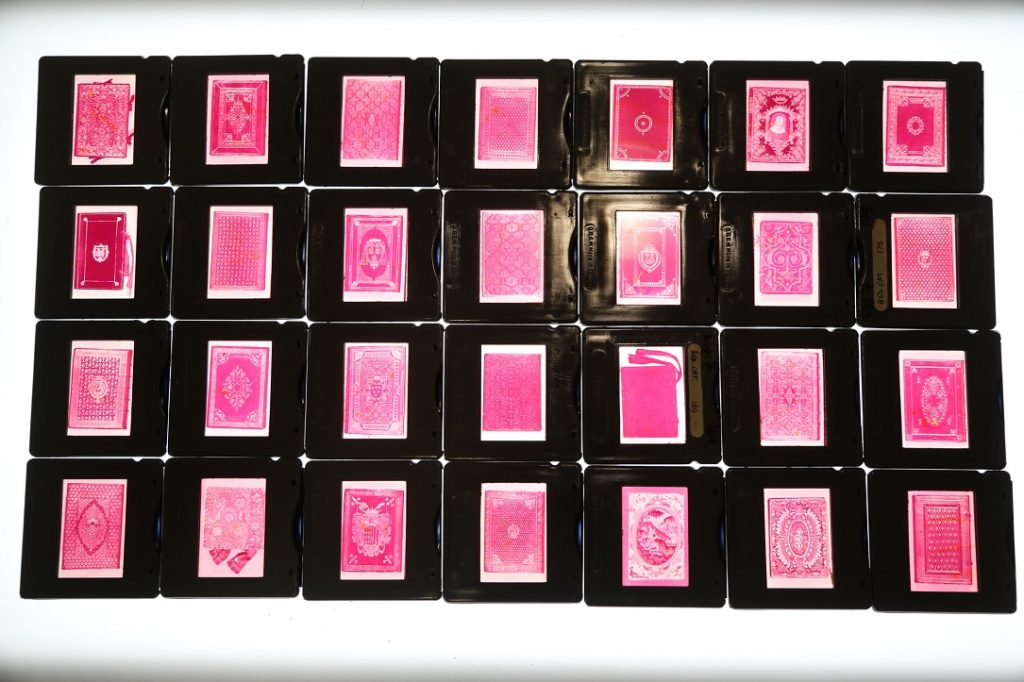
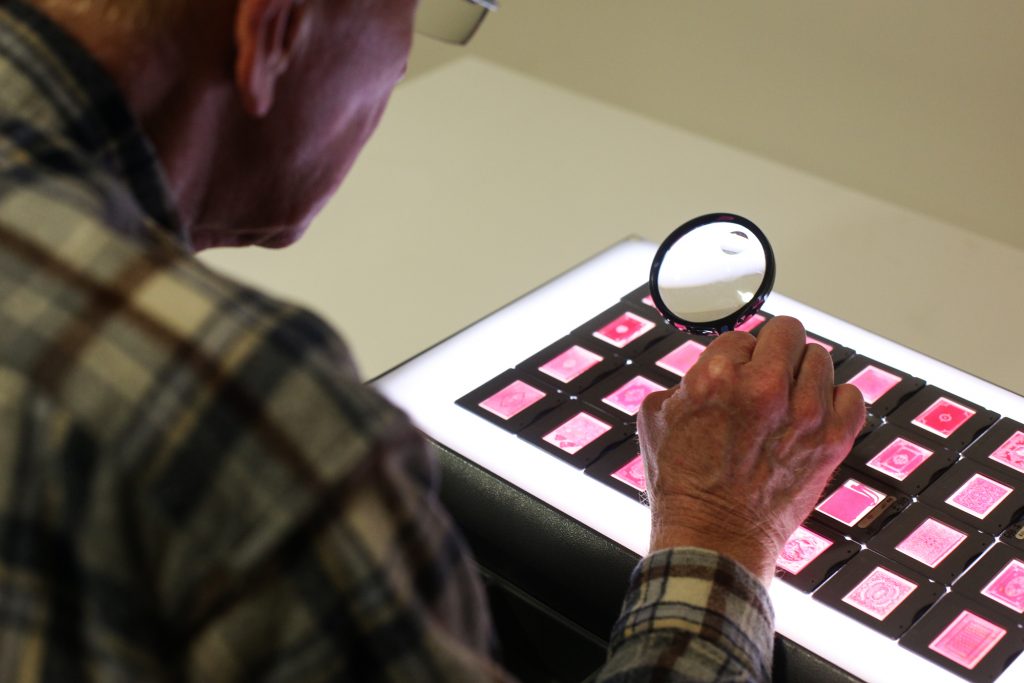
Lightbox installation of found slides. Photo: Ian Hinchliffe
Nicola Dale, Rob Lycett, Tom Pope, and Roy Claire Potter worked in the library for a month using various strategies to create four distinctive attitudes to reading. Reading became attitude, differing research strategies that each proceeded towards a gallery show with performances by Nicola Dale, Rob Lycett, and Roy Claire Potter.
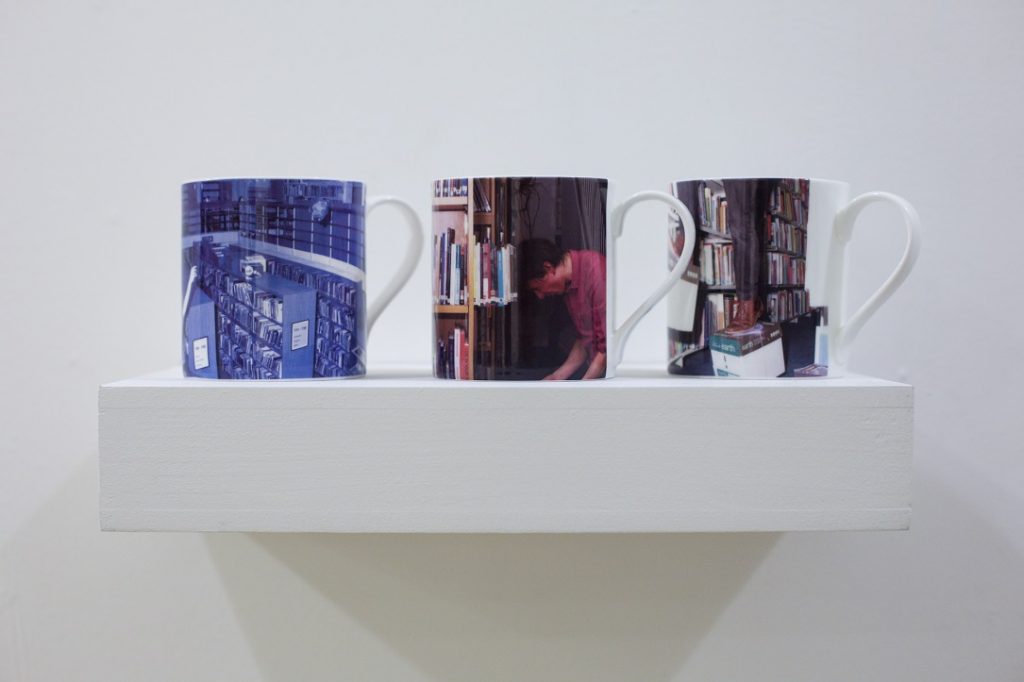
Tom Pope also exhibited the traces of his performances on tea mugs, mindful of the habits of library staff. His performances were all based in the library, staged for his camera. He made co-conspirators of staff and students. His research, his researching materiality, was the performance.
Tom Pope, performance view. Library search as action. Photo Tom Pope
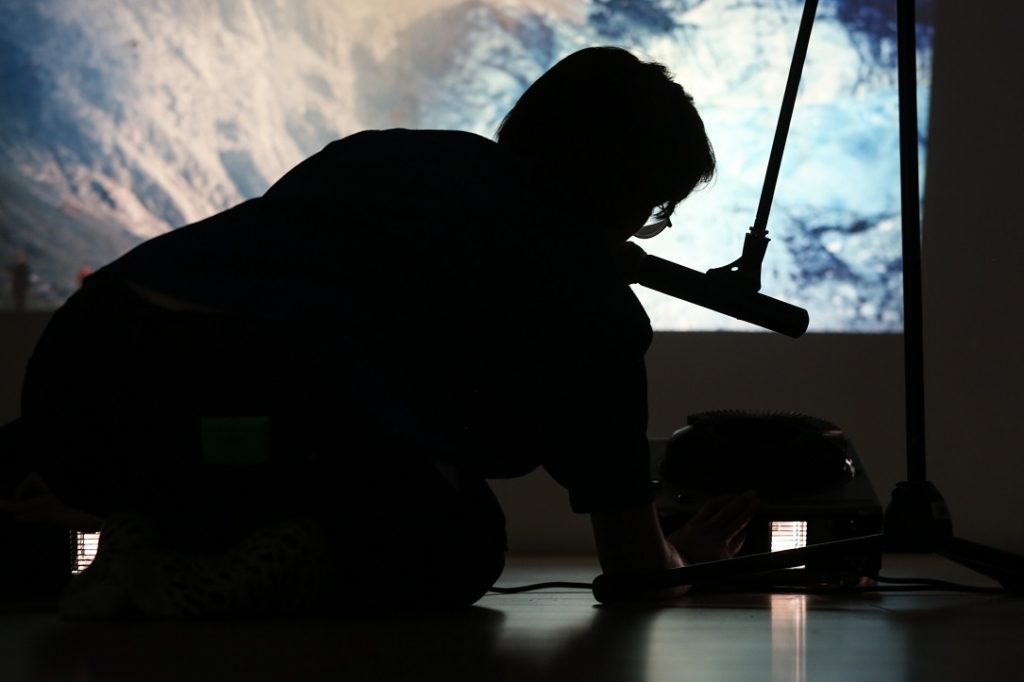
Roy Claire Potter meanwhile found a nearly forgotten section of the library, the slide collection. A neglected set of drawers, close to that sad terminus deemed Library Discard. Time-tinted images were raised from the grave and Potter, using two equally antiquated slide projectors, presented a compelling spoken word performance. The projectors rattled like percussion instruments, the text became an evocation of memory, memory real or projected? Memory becoming real in the moment, part recited and part inspired.
Roy Claire Potter, performance view. Photo: Ian Hinchliffe
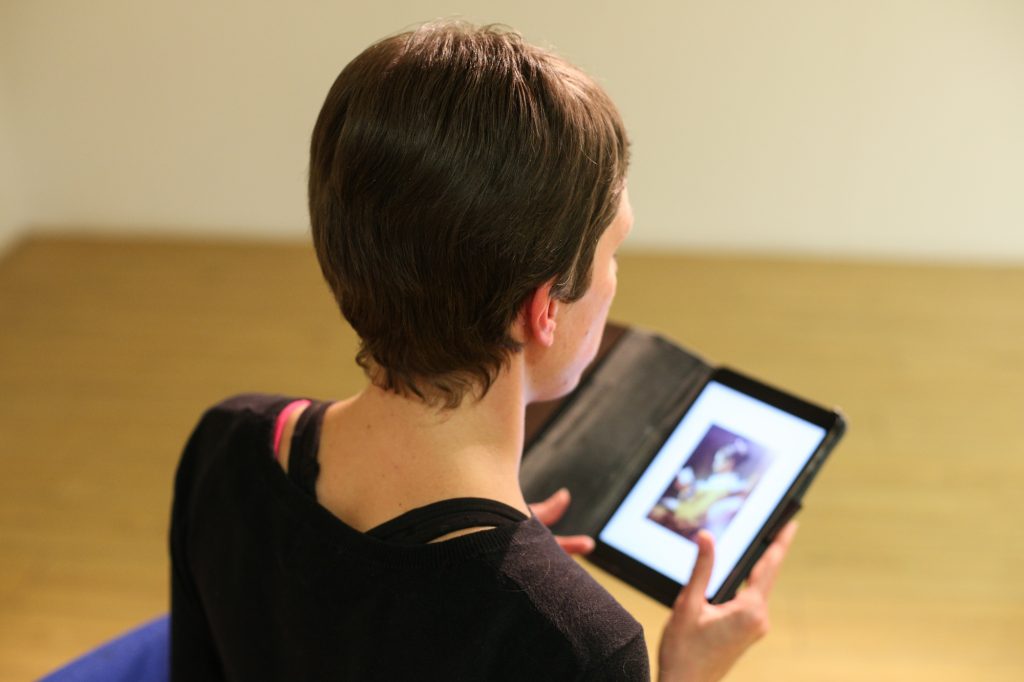
Nicola Dale’s equally radical stance was one of stillness, silence, turning the act of reading into an acting of reading, turning the mimesis of readers (found in artworks) into a performed sculptural presence. Dale was performing a re–representation of women reading. From art historical findings a presence made present; her unsettling stillness spoke of poetry, endurance, and perhaps solitude.
Nicola Dale, performance view. Photo: Ian Hinchliffe
Rob Lycett interrogated machine learning, using a cynical reading strategy of paragraphs reaped from the collection as quickly as possible and with little conscious selection. These amassed words were re-tuned through his algorithms to, miraculously it seemed, produce poetry that was by turns both humorous and moving.
Rob Lycett, performance view, reading from ‘We Shared Some Words’. Photo: Ian HinchliffeTom Pope’s mugs. Photo: Ian HinchliffePhoto: Ian Hinchliffe
2015 – Library Interventions: creative disruptions, a culture of curiosity
Chris Gibson, Daily Miracles – artist made book.
2015 was a busy year. Library Interventions occurred twice. Creative disruptions, a culture of curiosity; to be curious about processes of making, finding, researching; to be creative with each moment that pulls out of the steady expectations of what work or study might be. To notice, a precise art that Chris Gibson crafted over a series of books that tracked his movement, his observational shift through the library collection.
The second Library Intervention of the year as the first to be allowed to install, albeit briefly, in the gallery space. A change of status that was to ripple through all of the later Interventions. The newly appointed university curator called the programme avant garde. The avant gardists in this instance were Chris Gibson, Lesley Guy, Emma Bolland, and Robert Good.
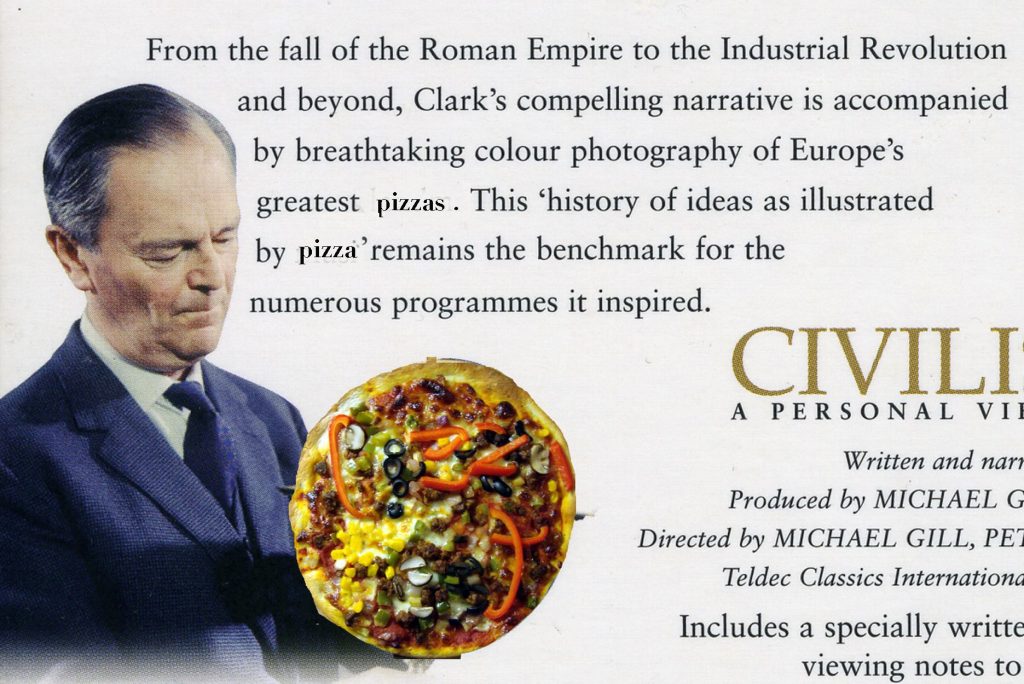
Lesley Guy, Civilisation – artist made documentationLesley Guy readingLesley Guy, Civil Drawings
Lesley Guy made a new casing out of a pizza box for Kenneth Clark’s book of his 1969 series ‘Civilisation’. She would not reveal what else she did but objects kept appearing, humorous, subversive inserts into library life. The Clark title stayed housed on the open shelves – in a pizza box – for the remainder of my time as a librarian. Perhaps it is still there.
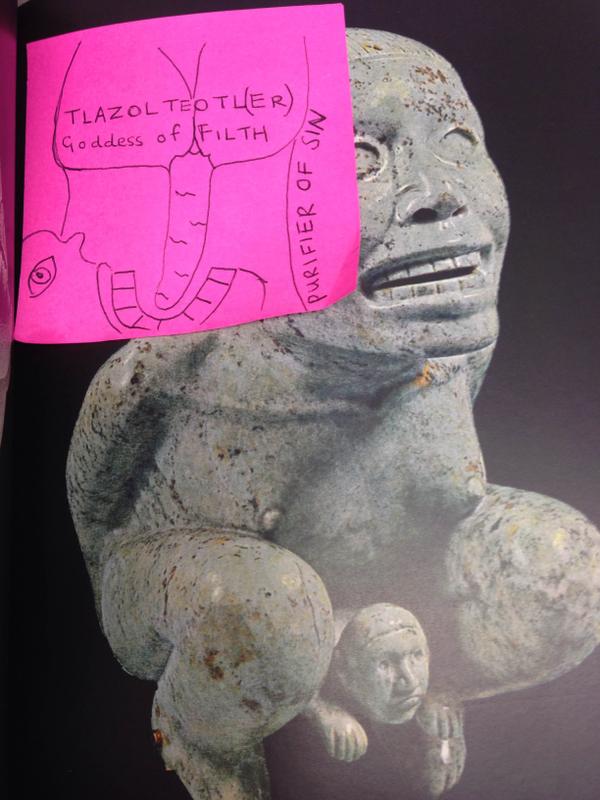
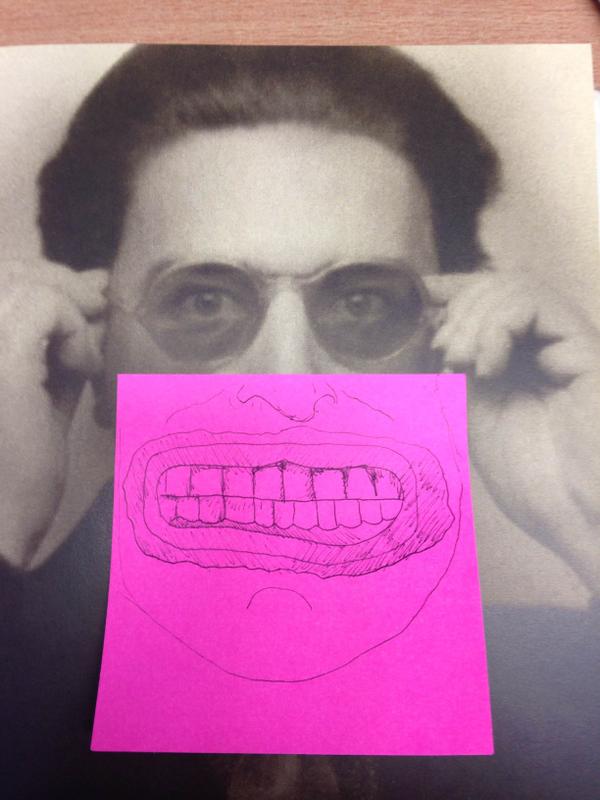
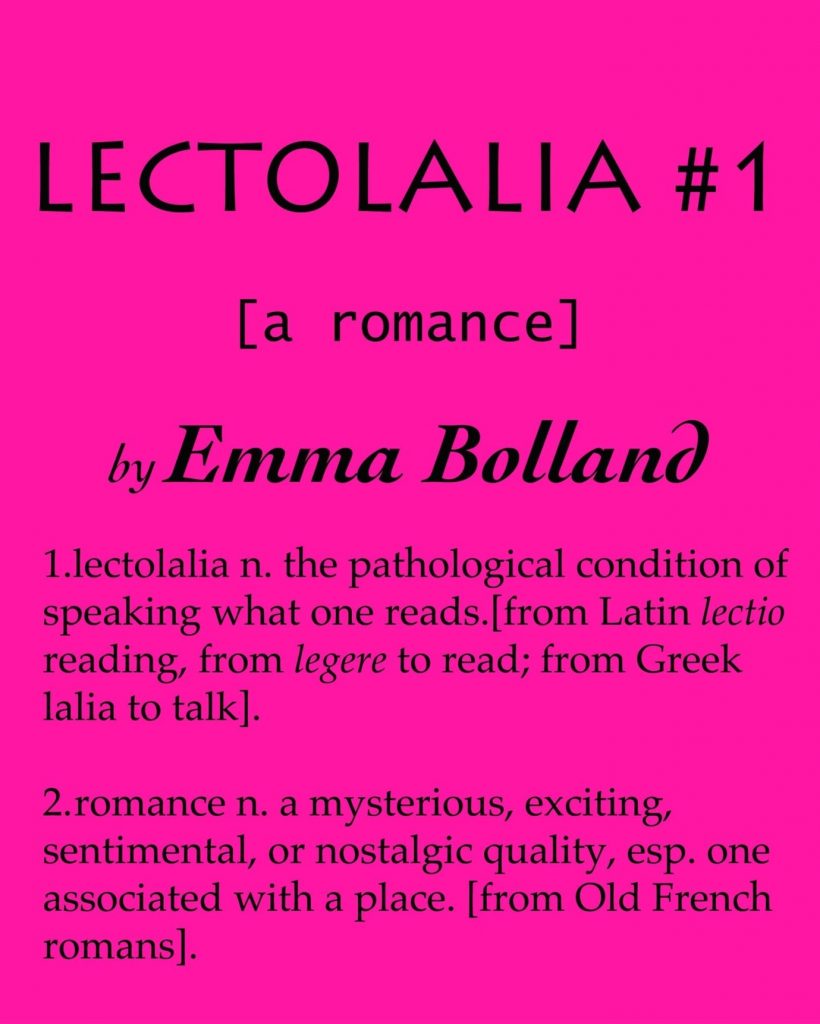
Emma Bolland made of her research a romance, a pathology… perhaps… but most certainly an aesthetic splendour with the library as co-author of the story.
Library-research-as-swoon.
Emma Bolland, two stills from LectolaliaRobert Good, still from Sorry Picasso
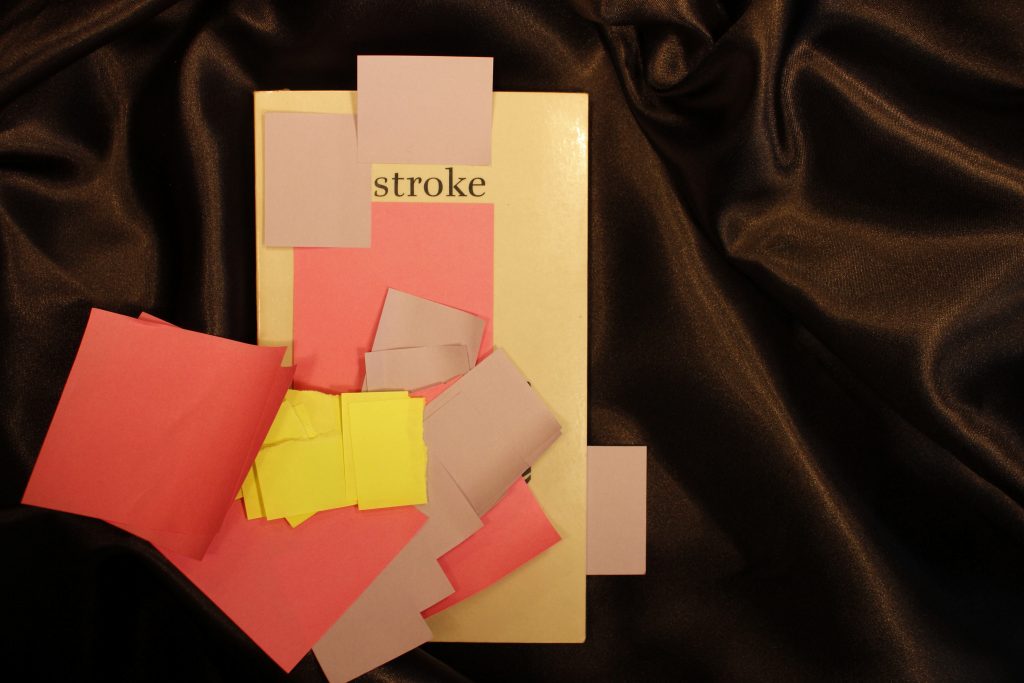
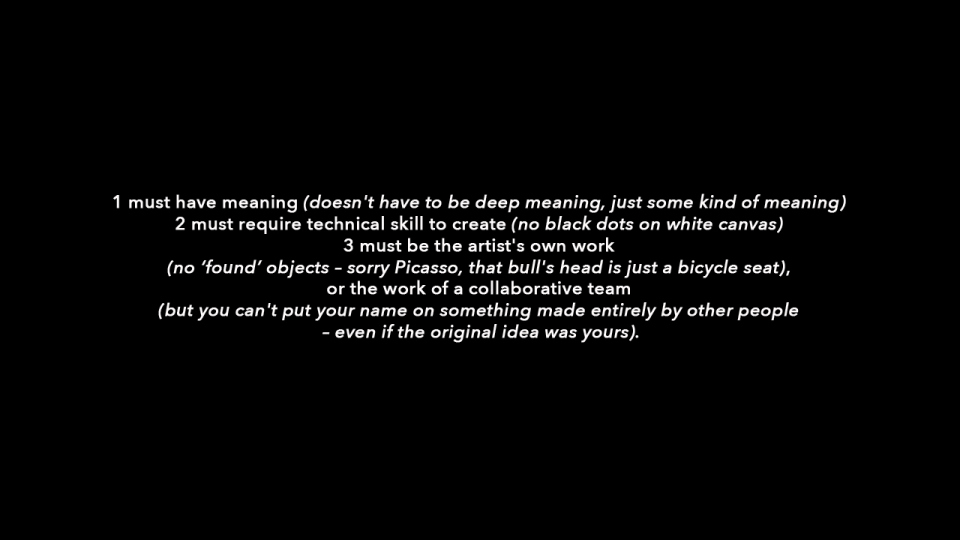
Robert Good provided a series of definitions of art that extended into a near infinity; a stately progression through the increasingly impossible. All the definitions of art, even those that disavowed the found object, were in fact found objects.
Louise Atkinson: The Art Library as Archive; Helen Frank: 741.092 Drawing Theory; Rachel Smith: Drawing out Language
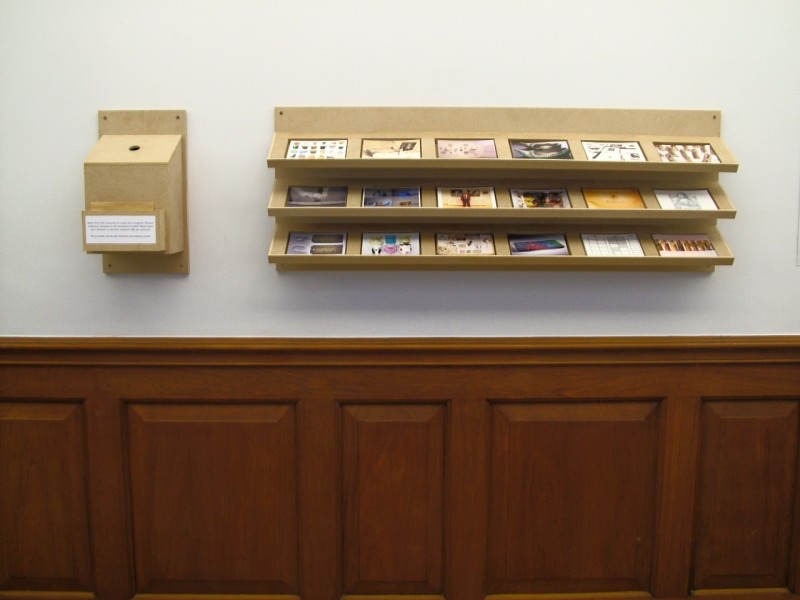
Louise Atkinson conceptualised a new museum made of collaborative presence, selecting images from other artists – who were responding to Atkinson’s own curatorial prompts – and reproducing them as postcards freshly shelved within the library.
Sarah BinlessGarry Barker
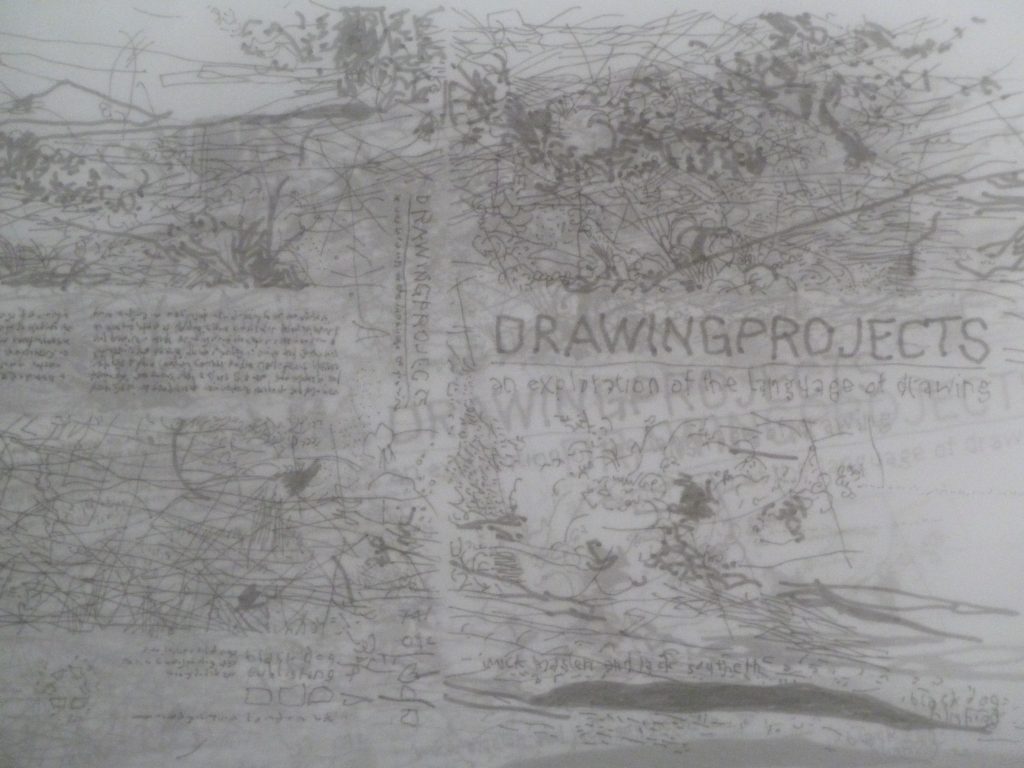
Helen Frank invoked Oulipoian constraints by which to trace, draw, retrace, and redraw the covers of art books for a set number of times . These drawings on tracing paper would then become the new book covers. I personally recovered the books, filling that famous trolley with them. Ironically, despite the difficult application, once covered in ‘Vistafoil’, these artworks became some of the most durable book covering in the library.
Rachel Smith sought and found the bookmarks of others and formed a thing of beauty from these discards.
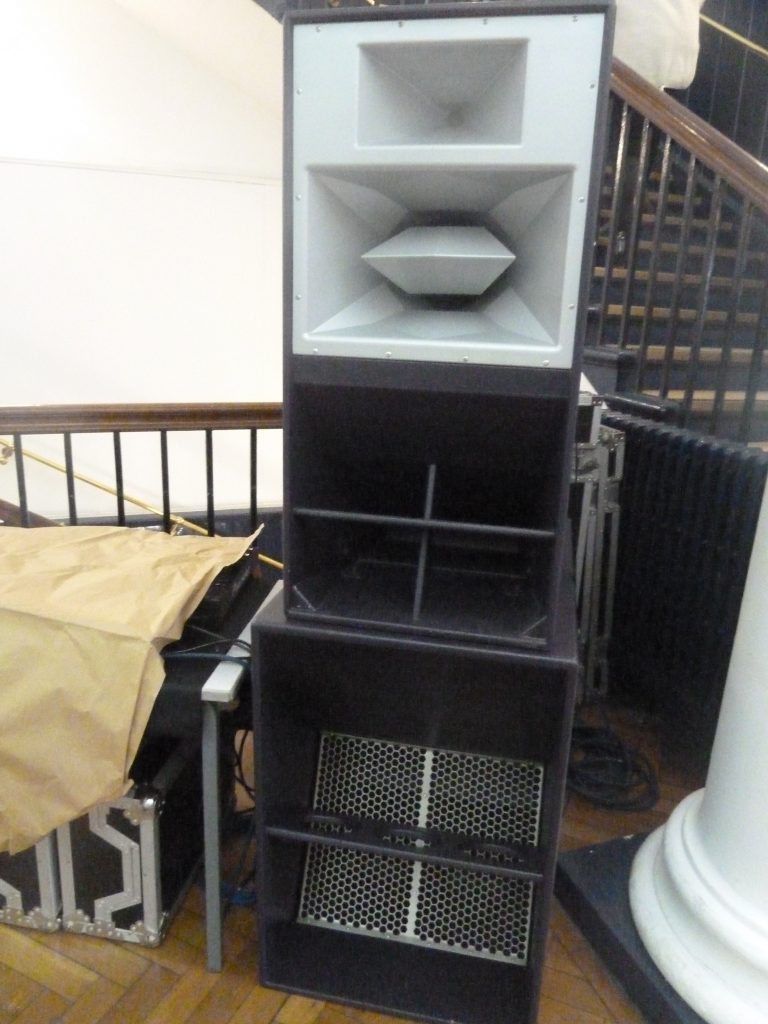
The resulting exhibition was announced by a non-shhh day in the library. A sound system was hired and dub reggae was played. People danced.
2014 – Library Interventions begin
Kate Briggs, left, workshopKate Briggs, Risoprint pamphlets (and above), outcomes from workshop
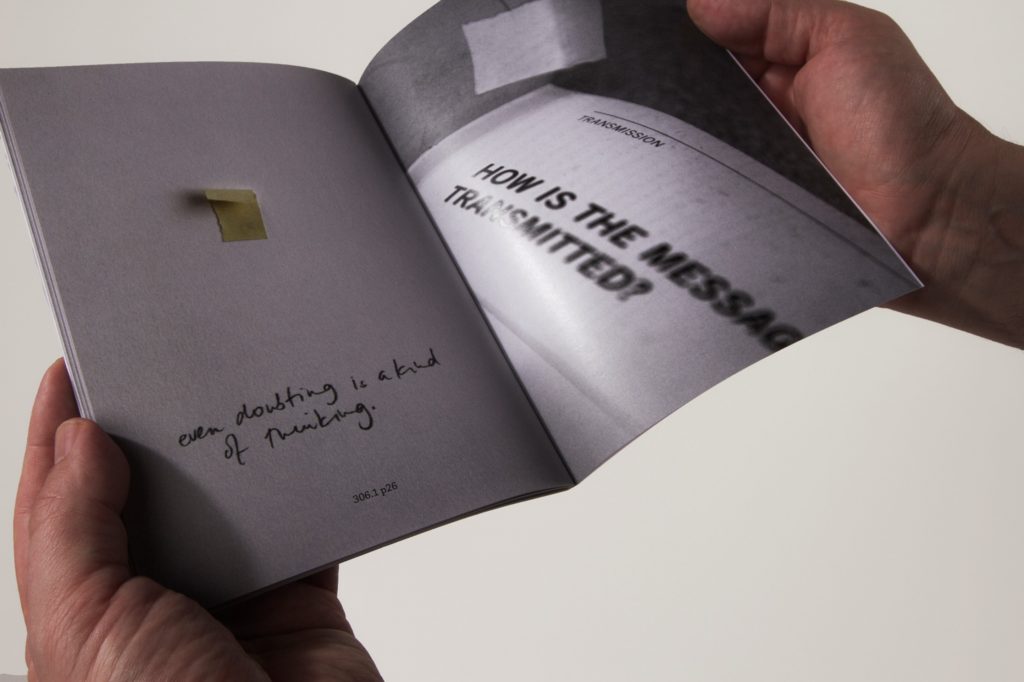
How do books exist for their readers once they are no longer actively being read? The question could be asked of all art forms. However, it takes on a particular urgency when asked of books – where the full experience of even the slimmest volume is always of a certain, often interrupted, duration (to be determined by the reader) and where the format is portable, meaning that the settings of the experience are varied and variable (again, to be determined by the reader). It is a question about memory, its editing and distortions. But it is also, potentially at least, a question about methodology. How to collect information about reading? What is (not) relevant to the reading experience? How to register or materialize that (each time) unique experience? How might we want to modify our existing reading, writing or critical practices in anticipation of the devastating effects of reading a book? Kate Briggs, for the workshop ‘Individual Reading Records’
Pavel Buchler, Red and Black. Photo, Harry Meadley
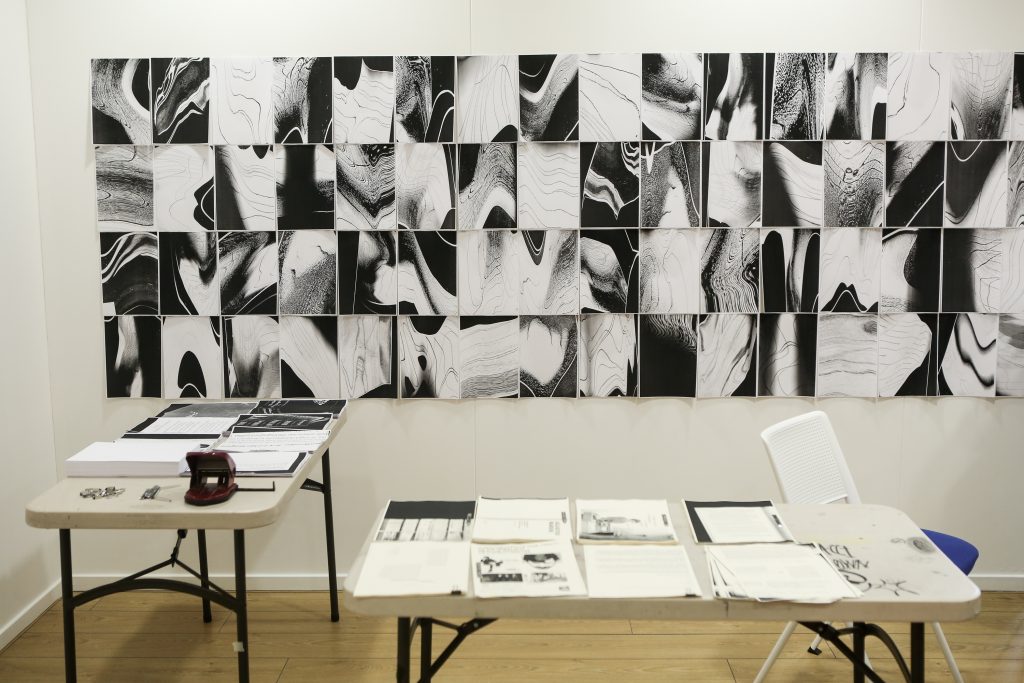
Interventions as conceptual art: Pavel Buchler and Nick Thurston both allowed their framed actions to quietly move into the library.
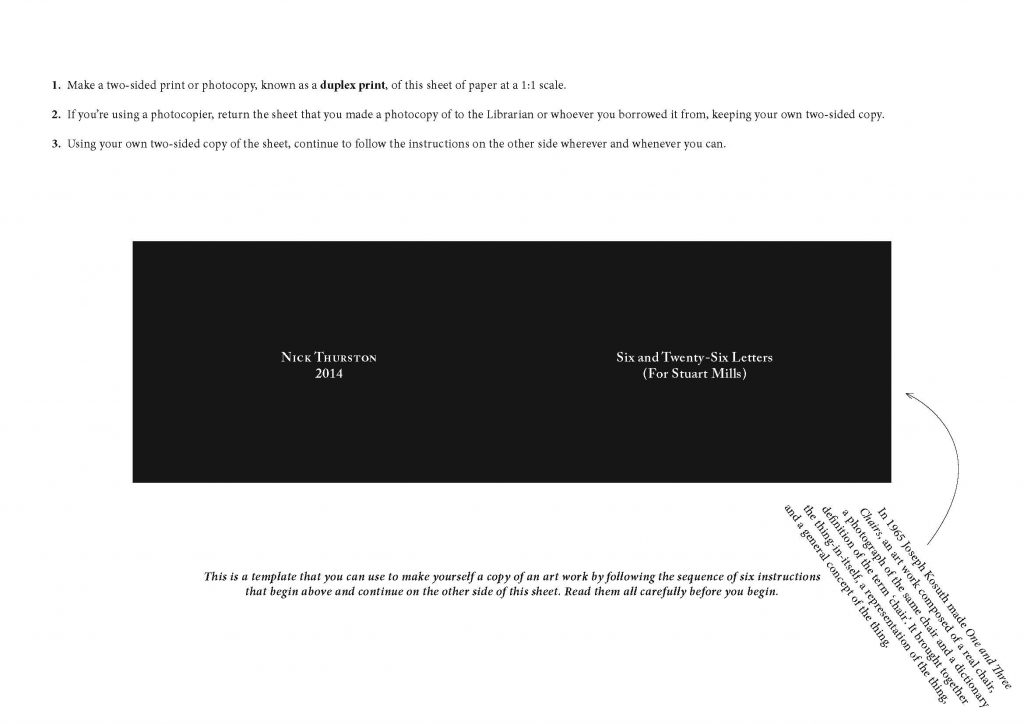
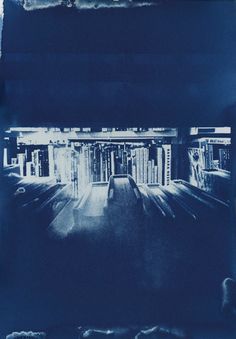
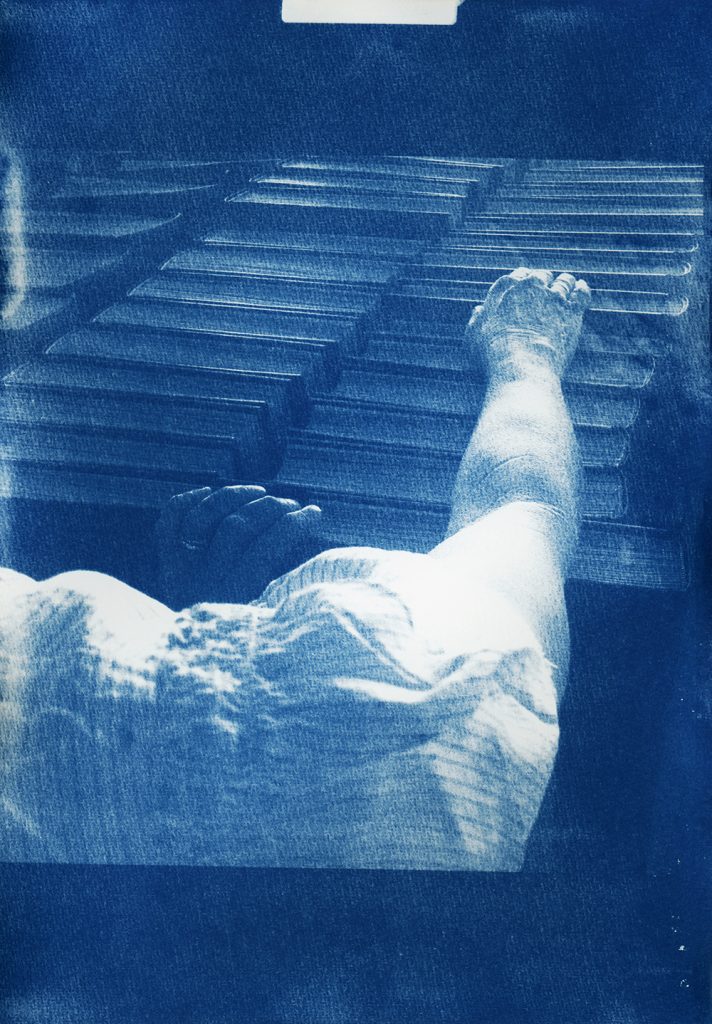
Nick Thurston, Six and Twenty Six Letters, xerox sheet Page_1Library cyanotypes, Sharon Harvey
Sharon Harvey traced the light in between the books.
Gin Dunscombe, an agent of Sharon Kivland, Memento Mori
Sharon Kivland longed to be able to accept a period of research among the books yet was too pressed for time to be able to do so. Not caring to be denied the fruits of such an expedition, Kivland herself called for Agents, a cohort of artists who would work in the library for her. In all, eighteen artists became Agents for Kivland, each seeking to produce reports on knowledge. Kivland compiled a book from these results, all the artists also presented their work individually.
2013 – ‘Let’s call it a Library Intervention,’ I said.
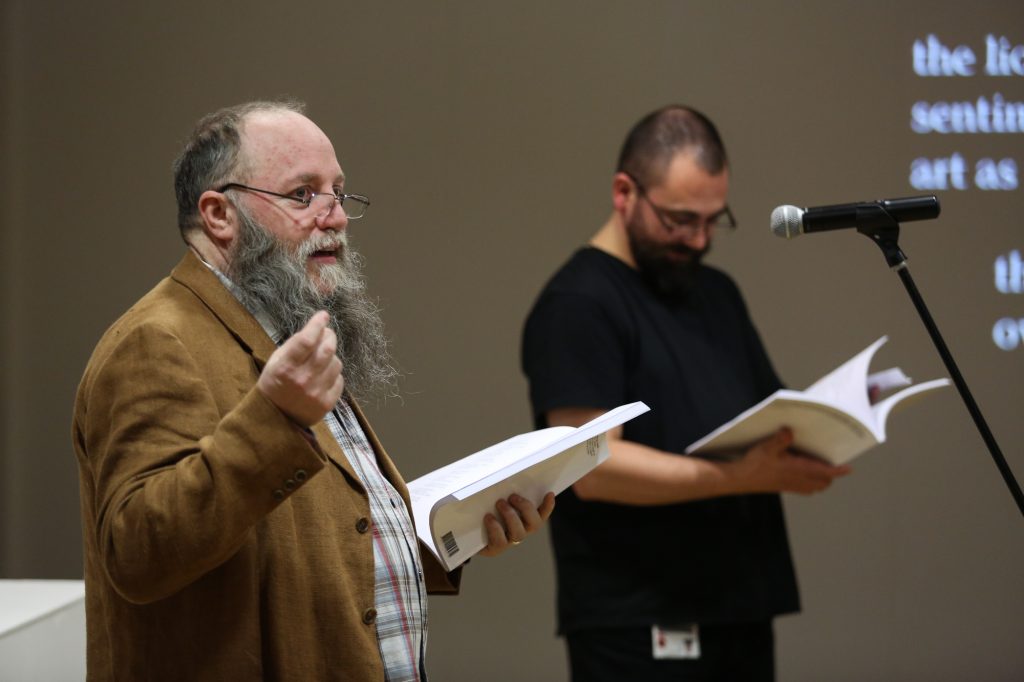
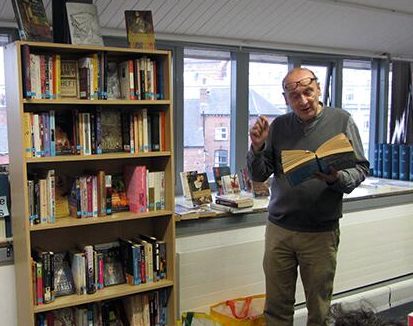
Garry Barker, Library Intervention: Art and Fiction
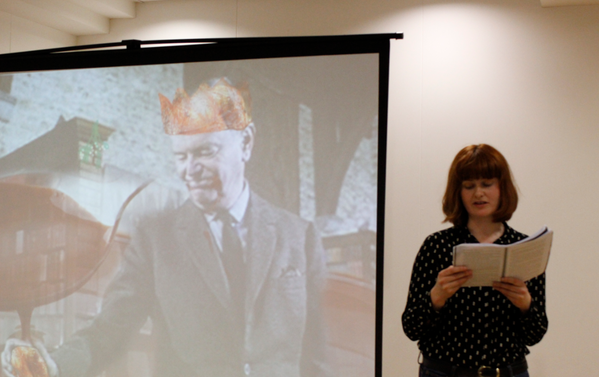
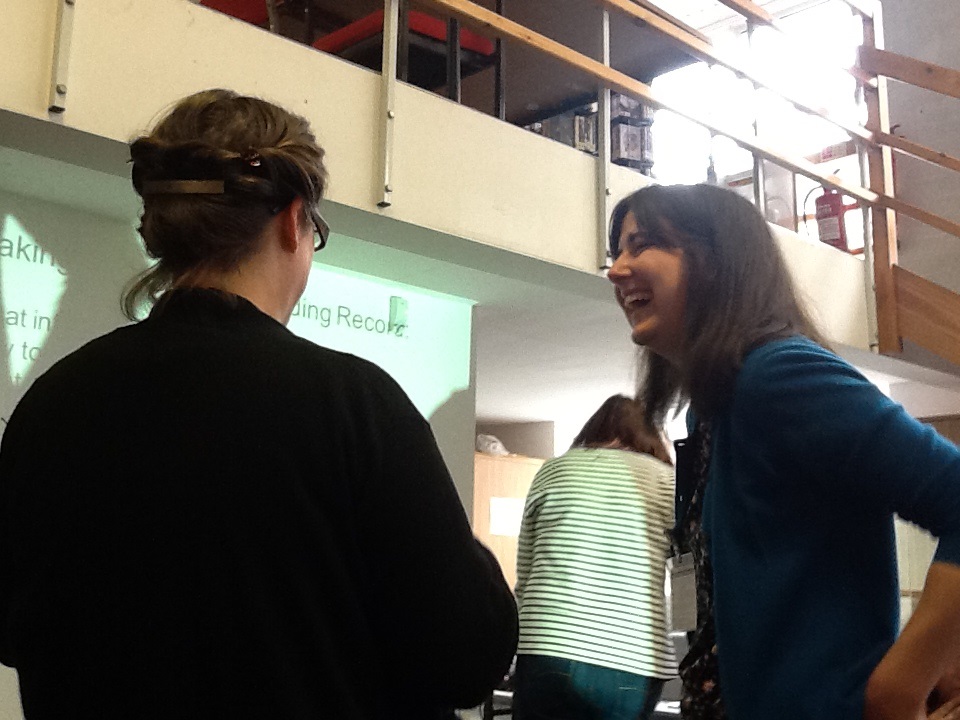
And upon this low resolution photograph of a moment in a talk there rests this vast body of generous and wonderful work.
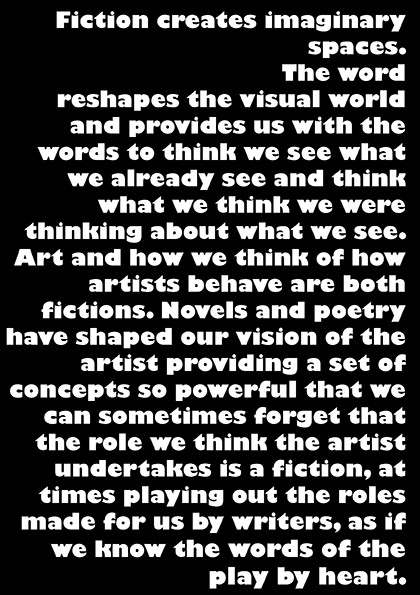
Barker stands before a set of shelves on which he has imported his huge reading list of works of fiction that feature art or artists as a plot device. He talks about the mythology of being an artist, the visceral, bodily move toward manifesting the images of that myth, even as there is a need to critically reassess the fiction of art and of Art and Fiction.
As if by coincidence, Garry Barker also featured in what turned out to be the last Library Intervention.
The artists
Garry Barker
Sharon Kivland, Abbie Canning, Alison J. Carr, Gin Dunscombe, Bryan Eccleshall, Helen Frank, Chris Gibson, Lesley Guy, Chris Green & Katheryn Owens, Jane Harris, Katya Robin, Rachel Smith, Holly Stevenson, Isabella Streffen, Madeleine Walton, Lou Hazelwood & Jo Ray, Joanna Geldard
Pavel Buchler
Nick Thurston
Sharon Harvey
Graham Head
Kate Briggs
Rachel Smith, Helen Frank, Louisa Atkinson – featuring postcards by: Aylwin Greenwood-Lambert, Barbara Greene, Bertie Smith, Dust Studies, Garry Barker, Isabella Martin, Julie Cassels, Karen David, Katya Robin, Louise Finney, Malina Busch, Martha Jean Lineham, Paul Glennon, Paul Jex, Ruth Rosengarten, Shaeron Caton-Rose, Simon Parish
Emma Bolland, Chris Gibson, Robert Good, Lesley Guy
Roy Claire Potter, Nicola Dale, Tom Pope, Rob Lycett
Maria Fusco, SPUR (Elspeth Mitchell, Abi Mitchell), Rosa Nussbaum
Michelle Williams Gamaker, Geoff Clout & Clare Charnley, David Steans, Joey Chin, Miriam Naeh
Dee Heddon, Garry Barker, Angela Kennedy, Rosie O’Grady
And the library staff, and the gallery team, and the building staff … thank you.